[The Butter] 20,000 Entrepreneurs Have Passed Through — Are You an Underdogs Alumnus? [Meet the Innovators]
2025-02-20
|
The Butter
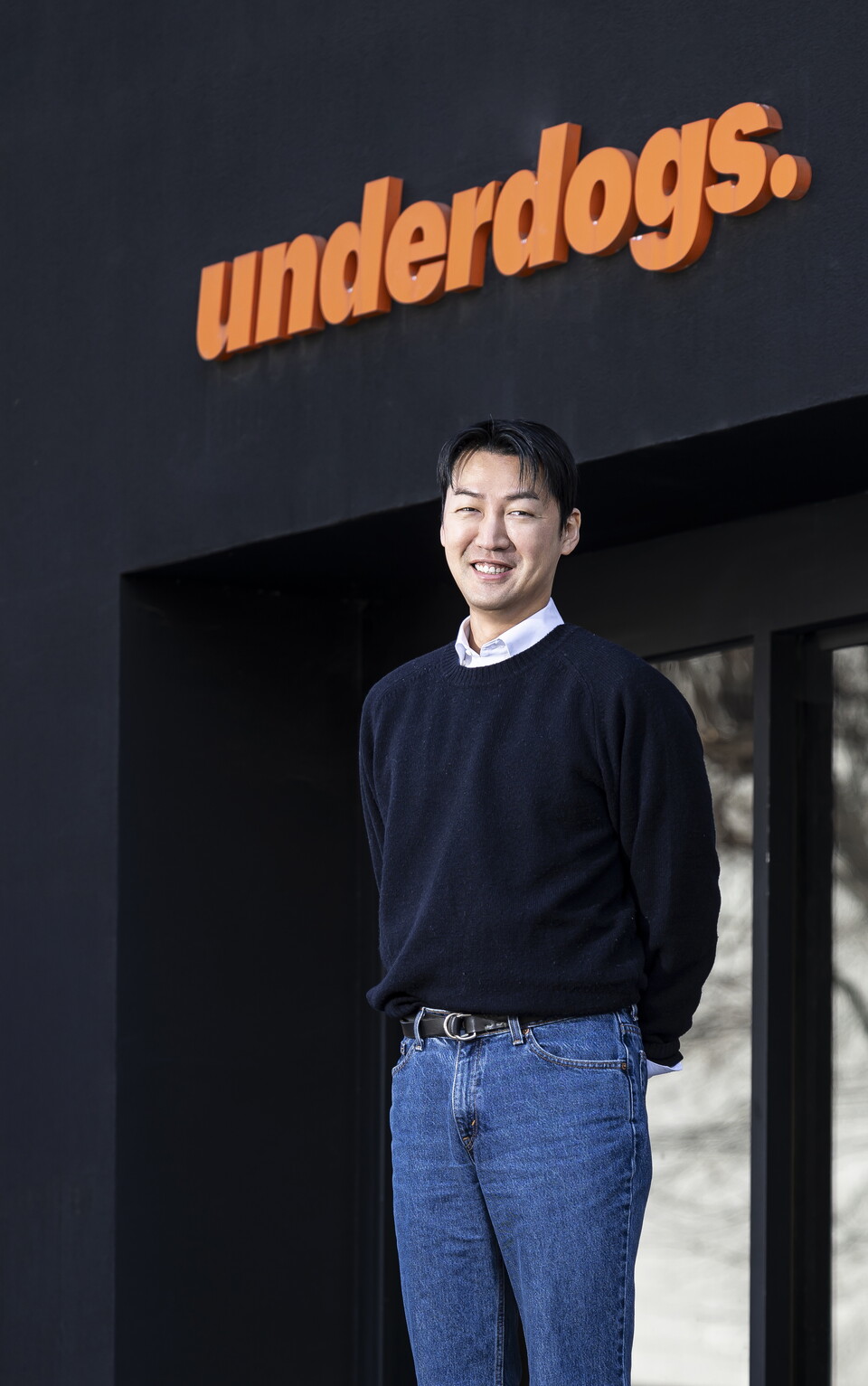
Interview with Kim Jung-heon, CEO of Underdogs There are young people who fearlessly dive into the vast ocean of the startup ecosystem. They jump into the sea ambitiously with the goal and vision of making the world a better place. However, they quickly realize something is wrong. The waves that come crashing in are higher than expected, and reality is cold and harsh. Is there any aspiring startup founder who doesn't know about Underdogs? Founded in 2015, Underdogs is a social enterprise that provides free education to entrepreneurs. It teaches survival swimming to survive in the startup ocean. So far, 20,000 trainees have gone through Underdogs education. It's well-known in the capital area, but even more famous in regional areas. It successfully completed the 'Localize Gunsan' project, which is considered a model case of urban regeneration, and is cultivating young entrepreneurs through the 'Hana Social Venture University' linked with 30 universities nationwide. Underdogs, marking its 10th anniversary, has reached a turning point. Kim Jung-heon (41), CEO of Underdogs, met at the company headquarters in Jongno-gu, Seoul on the 13th, said, "We are preparing for KOSDAQ listing." Last year's sales were 20 billion won. The company recently completed a pre-IPO investment worth 9 billion won, targeting listing in the first quarter of next year. Kim Jung-heon, CEO of Underdogs, poses in front of the company headquarters. Underdogs, known as an 'entrepreneurship academy,' has met and educated 20,000 founders over the past 10 years. Why free startup education for 10 years? "I've heard several times that Underdogs is doing well in local areas." "The project we conducted in Gunsan with SK Innovation E&S received positive reviews. We benchmarked Japan's Kamiyama village's local regeneration project and conducted Korea's first 'region-based settlement' startup education. We selected both local and non-local youth, provided startup education, and made them settle in Gunsan. The accumulated sales of Gunsan startup teams alone exceed 1 billion won. It's more meaningful because it's a local activation model carried out with purely private capital." "Did local government funds not go in at all?" "Not at all. When outsiders come and use Gunsan's resources, conflicts can arise. We induced external private resources and conducted business, so the local response was good. Based on the Gunsan case, starting last year, we began a new public-private collaboration project in Busan. It's a platform called 'I'm In Busan' where corporations and citizens solve Busan's social and environmental problems together. We also support discovering companies with solutions." "How did you come to cooperate with regional universities?" "Universities are the core of regions. Universities must function well to supply talent to the region. However, most local projects exclude universities. Underdogs, together with Hana Financial Group, has signed agreements with 30 universities across the country to nurture regional entrepreneurs. 1,500 people are receiving startup education simultaneously with the same curriculum." "There are many other places offering startup education besides Underdogs. What's your differentiation?" "Startups are an area that cannot be taught like basic subjects. It requires a process of providing one-on-one solutions tailored to entrepreneurs and discussing even trivial matters together. There are approximately 300 'startup coaches' with official Underdogs licenses nationwide. We have the largest pool of coaches. Our coaching team, consisting of current and former investment officers and entrepreneurs, helps write business plans and pitches, provides organizational culture education, and carefully teaches about understanding local stakeholders." "You don't charge individuals for education, right?" "For 10 years, we've been providing free education to entrepreneurs. Students don't pay. We conduct education with Underdogs' own resources or receive funding from companies and the public sector. This principle won't change in the future." "There must be a firm reason for this." "Before founding Underdogs, I learned a lot from two startup experiences. I hope young people who challenge startup don't experience the same mistakes and trial-and-error that I did, so I started free education under the name 'Underdogs Academy.' For Underdogs, education is the most important identity. It's not a means to earn money but a means to share experiences." Entrepreneurs with good intentions change the world Underdogs is a social enterprise. Unlike profit-making companies whose goal is to generate revenue, social enterprises conduct economic activities with the goal of 'solving social problems.' "What is Underdogs' social mission?" "Between growing one 100-billion-won company or 100 one-billion-won companies, which creates greater social benefit? I think it's the latter. Underdogs has a clear social mission to 'change the world through entrepreneurs.' We believe that nurturing entrepreneurs with good intentions is the way to create a sustainable society." "What exactly is an 'entrepreneur with good intentions'?" "We also call them problem-solving entrepreneurs. Most people who come to our education are like this. It's not startup for themselves but deciding to start a business to solve problems in their surroundings. Since succeeding these people is the way to achieve our mission, I coach each person thinking of them as 'co-founders' of Underdogs." Met with CEO Kim Jung-heon at Underdogs headquarters in Jongno-gu, Seoul on the 13th. Underdogs is challenging KOSDAQ listing in the first quarter of next year. If successful, it will write history as the 'first social enterprise listing.' "You seem to have strong non-profit tendencies." "We originally started as a non-profit. I've been volunteering at NGOs since my second year of high school. While in college, I did a 6-month internship at an NGO research institute in the US. That's where I first learned about the concept of 'Social Enterprise.' It felt like discovering a light." "Why is that?" "I was majoring in business administration in college, but I was very interested in non-profit rather than for-profit, so I had many concerns. When I encountered social enterprises like Ben & Jerry's in the US, I realized you could make money while doing good. I thought social enterprise was a way to achieve non-profit objectives as quickly and efficiently as possible." "Now I understand why Underdogs is a social enterprise." "Four of us started together..."