10 Keywords That Will Lead Korea's Social Sector Trends in 2026
2026-01-07
|
The Butter
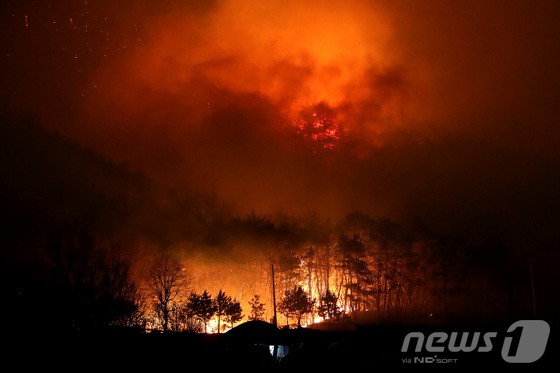
A Different Current is Being Detected in Korea's Social Sector A new perspective is emerging in Korea's social sector, prioritizing relationships over performance, depth over expansion, and people over technology. The Butter conducted consultations with 50 leaders from the social sector—including NGOs, foundations, investment firms, and startups—to select "10 Keywords for Korea's Social Sector in 2026." The most commonly mentioned words were "recovery" and "solidarity." There was also evidence of growing awareness and confidence within the social sector regarding Korea's position and role in the global context. Based on expert opinions, The Butter selected 10 keywords that will lead the flow of Korea's social sector in 2026: ▶︎Climate-Resilient Society ▶︎Longevity Gap ▶︎AI-Native Impact ▶︎New Glocal ▶︎K-Impact ▶︎Next Gen Mental Health ▶︎Local Money ▶︎Crypto Donation ▶︎Social Solidarity Economy ▶︎Capacity-Building Philanthropy 01. Climate-Resilient Society Last March, a wildfire spread like a raging flame threatening to engulf residential areas in Gwangeum-ri, Namhu-myeon, Andong-si, Gyeongbuk Province. Climate crisis has shifted from being "a future to prevent" to "a present to adapt to." Climate disasters such as heat waves, floods, and wildfires recur annually, with damage consistently concentrated in vulnerable regions and communities. A climate-resilient society refers to a society equipped with the capacity to minimize damage from climate crisis and continue recovery and transformation. The essence of a climate-resilient society lies not merely in restoring damage to its original state, but in constructing a better system than before the disaster. Kim Jin-a, Secretary-General of the Beautiful Foundation, states: "Resilience means more than simply returning to the original state; it refers to the social muscle that endures disasters and adapts in better directions. In an era of multiple disasters, investment in strengthening resilience across society is urgently needed beyond emergency relief." Globally, there are moves to elevate climate-resilient society to a core agenda of national governance. The United States has established a "National Climate Resilience Framework" and presented six major goals to strengthen adaptability in economics, society, and ecosystems. In Korea, discussions to build a climate-resilient society are accelerating. Choi Chang-nam, Chairman of Kia Measures, states: "In the NGO sector, climate action is not simply an environmental issue but an element affecting the survival of all vulnerable groups—children, food security, migration, and health. It is now time to strengthen resilience so communities can adapt to changing climates and sustain livable lives." At the "3rd Next CSR Forum" held by The Butter in September of last year on the theme of "climate disasters," disaster relief specialists, academics, and volunteer field workers shared the need for early warning and prevention systems, customized responses considering vulnerable groups, and mid-to-long-term support structures leading to daily life and community recovery. The forum also confirmed that corporate social responsibility is evolving into structural interventions centered on "prevention and recovery." POSCO Holdings is designing disaster response infrastructure and education and training programs based on the case of Australia's New South Wales Rural Fire Service (RFS). Hyundai Motor Group is establishing a comprehensive response model combining mobility, housing, logistics, and technological capabilities, covering emergency relief, housing recovery, and firefighter recovery support. 02. Longevity Gap Challenges in designing a sustainable longevity society (Longevity) are spreading, particularly in the private sector. At the "2025 Asia Longevity Forum (ALF)" hosted by The Butter in November last year, experts from various Asian countries, including Korea, gathered to explore Asian solutions for a longevity society. Public, non-profit, and private sector organizations shared diverse perspectives and cases regarding what mechanisms society needs so that "extended life" becomes a source of joy rather than tragedy. Experts participating in the forum identified "isolation" rather than "income" as the biggest cause creating inequality and gaps in a longevity society. As people age, social relationships, roles, and points of contact decrease, leading to gradual departure from social safety nets and creating gaps in health, lifespan, and quality of life—this is referred to as the longevity gap. What is noteworthy is that the longevity gap is not a problem of "old age" but a problem spanning an individual's entire life. It appears that isolation among diverse generations—from middle-aged people whose relationships sharply decrease after retirement to single-person households and young adults—accumulates over time, deepening the longevity gap. If the core of longevity inequality is isolation, the solution must differ. "Relationship-based care" that restores social connections and roles is necessary. Relationship-based care is an approach that prevents isolation and preserves the dignity of life through "social relationships." It is a concept that redefines care not as a simple service but as a social infrastructure that operates within a relational network of people, generations, regions, and systems. Shin Hye-young, Director of Seoul Community Chest of Korea, states: "As single-elderly households increase, problems stemming from isolation and disconnection, such as deaths from loneliness, are rising. Intensive support and investment to create connections in a longevity society are needed." This year, discussions on isolation and connection in a longevity society are expected to be fully underway in the social sector. Cho Won-hee, Representative Attorney at Law Firm DLG, states: "Discussions about the dignity of the elderly should be conducted centered on the social sector. While viewing the growing elderly population as a 'phenomenon' rather than a 'problem,' we must confront longevity issues and find solutions together."